
Help sheet for disorders and illnesses
Multiple sclerosis
Autoimmune disease of the central nervous system
Translated by AI from FrenchRead the French original
Introduction
This help sheet for the disease aims to help and support the patient along several lines:
- A general explanation of how the disease manifests and evolves, understanding being an important point.
- A psycho-emotional and psychosomatic interpretation of the disease.
- The recommended nutritional intakes, to try and to consider, whether in terms of vegetables, fruits, supplements, spices, plants, essential oil, etc. These intakes can improve the condition.
- The benefits of an energetic approach and reading.
- Other advice aimed at helping and living better with the disease on a daily basis.
This approach is organized around 4 axes:
- Psycho-emotional interpretation.
- Philosophical, in order to step back and bring other perspectives on situations.
- Nutritional: dietary supplements, herbal medicine, aromatherapy…
- Energetic: the value of an energetic approach to the body in connection with TCM (Traditional Chinese Medicine).
As the saying goes, “skeptical but open”, the idea here is to try, to consider, and to look from different angles at what the disease might be trying to say, what it might mean in all the aspects that seem relevant to us. This approach should not be seen as a method that opposes traditional / allopathic medicine, or that is sufficient in itself, but as a complementary approach. It of course promises no cure and no certainty, but rather aims to bring meaning, a listening ear, answers, and other angles in the way of seeing and approaching things. Without promising a cure, these complements may perhaps improve your daily life, slow down the disease, or bring you serenity and moral peace, even despite your physical condition. It may also lead you to question your beliefs, some of your behaviors, your reactions, in order to lead you toward greater awareness. No therapeutic approach in the world cures everyone of everything, at all times, so complementarity, openness and humility are called for.
Having lived through it and still living it as I write these words, illness is an ordeal, an overwhelming ordeal that at first fills us with indignation, because we do not understand why life has come to punish and sanction us, because that is how we experience it and see it. We then live through refusal, anger, injustice. That said, once this first phase has been lived through, we can then choose to persist, resist and sink deeper into these feelings of anger, melancholy, incomprehension, and tend toward, or even slide into, depression. Or we can choose to see this disease as a message or an opportunity for reading. At the very least, to try to undertake a pilgrimage of self-discovery, of one's history, of what one believes to be one's identity, and not to be afraid to question them. To go exploring the world and all the traditions, cultures, methods and other customs that were until then still unknown to us. I am not necessarily talking about traveling, it can simply be books, shows, podcasts, meetings with therapists, sharing experiences, discussions, etc. As far as I am concerned, this is the path I chose to take, and which leads me to write these words to you today. I am not saying it is an easy thing, or that everything is beneficial, but what I can testify to is that I have since been living with much more calm, peace, and inner joy on a daily basis. This quest for meaning, this search for answers, if I may call it that, is a personal journey that you alone choose to undertake.
Explanations of the disease
Definition
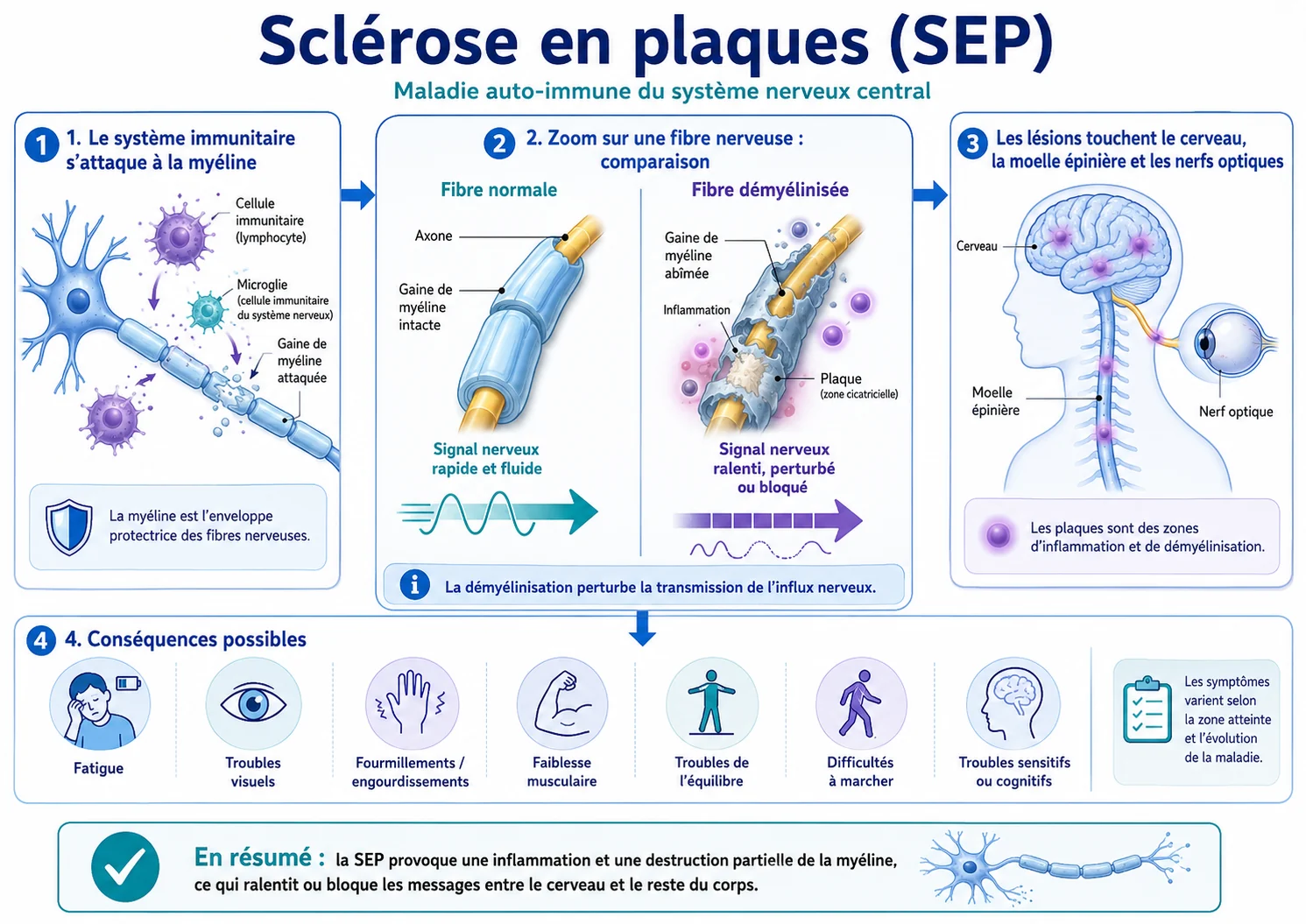
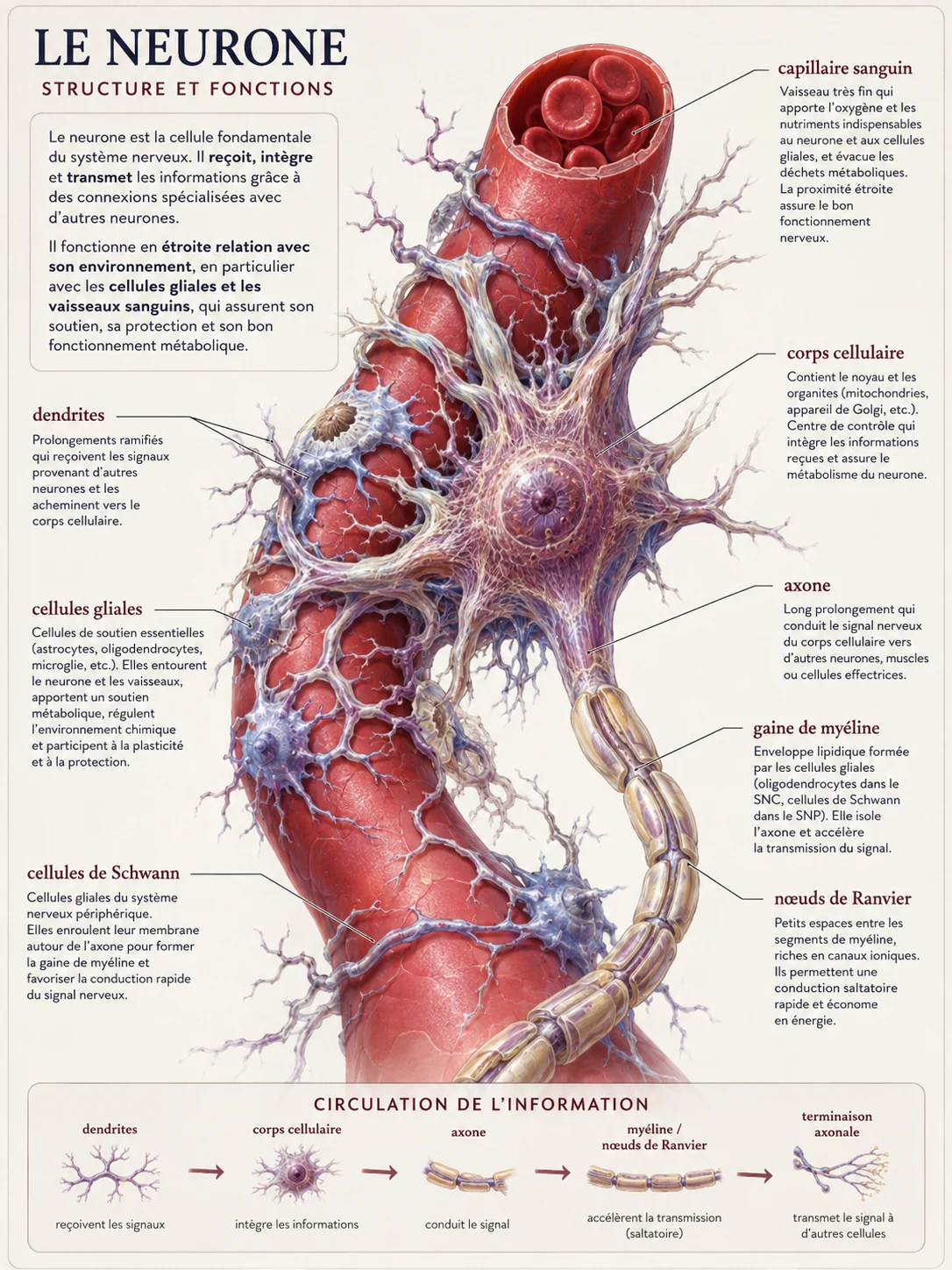
Multiple sclerosis (MS) is a chronic autoimmune, inflammatory and demyelinating disease of the central nervous system (brain, spinal cord, optic nerves). Autoreactive T lymphocytes, accompanied by B lymphocytes and macrophages, cross the blood-brain barrier and attack the myelin sheath produced by oligodendrocytes. This demyelination impairs the saltatory conduction of the nerve impulse along the axons (at the nodes of Ranvier), slowing down or blocking transmission, and forms sclerotic lesions/plaques disseminated in space and in time, hence the name.
Eventually, axonal loss and neurodegeneration are added, responsible for progressive disability. Clinically, the main forms distinguished are relapsing-remitting (RRMS, ~85% of cases), secondary progressive (SPMS) and primary progressive (PPMS). Diagnosis is based on the McDonald criteria: MRI lesions disseminated in time and space, often associated with oligoclonal bands in the CSF (cerebrospinal fluid). The symptoms depend on the location of the lesions (optic neuritis, motor/sensory deficits, ataxia, fatigue, etc.).
In detail
Autoimmune means that it is your own immune system cells that turn against your other healthy cells and tissues. Your immune system behaves as if they were viruses or foreign bodies.
Blood-brain: it is a barrier between the CNS (central nervous system: brain and spinal cord) and the blood system, in order to protect the CNS from pathogens, toxins and other aggressions.
Thus it is the whole process of the immune system (dendritic cells → T/B lymphocytes → macrophage) that takes part in demyelination and overrides the blood-brain barrier. When myelin is damaged, it disrupts the nerve signal, which slows down or no longer gets through. This can thus cause severe, disproportionate fatigue, mood disorders, memory disorders, etc. But this is not permanent, because it can appear in relapses and then subside.
Affected axons have difficulty transmitting signals, which can lead to a dispersion of the signal, and therefore an increase in the energy expenditure needed to transmit it.
So it is the structure of the brain that is affected, as well as the spinal cord, since it is also myelinated. This inflammation oxidizes the body and disrupts neuronal mitochondria. Mitochondria are small energy factories (ATP), present in every cell, and they are precisely what is needed to produce energy. In the context of this disease, as with others, it can be worthwhile to support the body with dietary supplements. We will come back to this at the end of this document.
Structure of a synaptic nerve
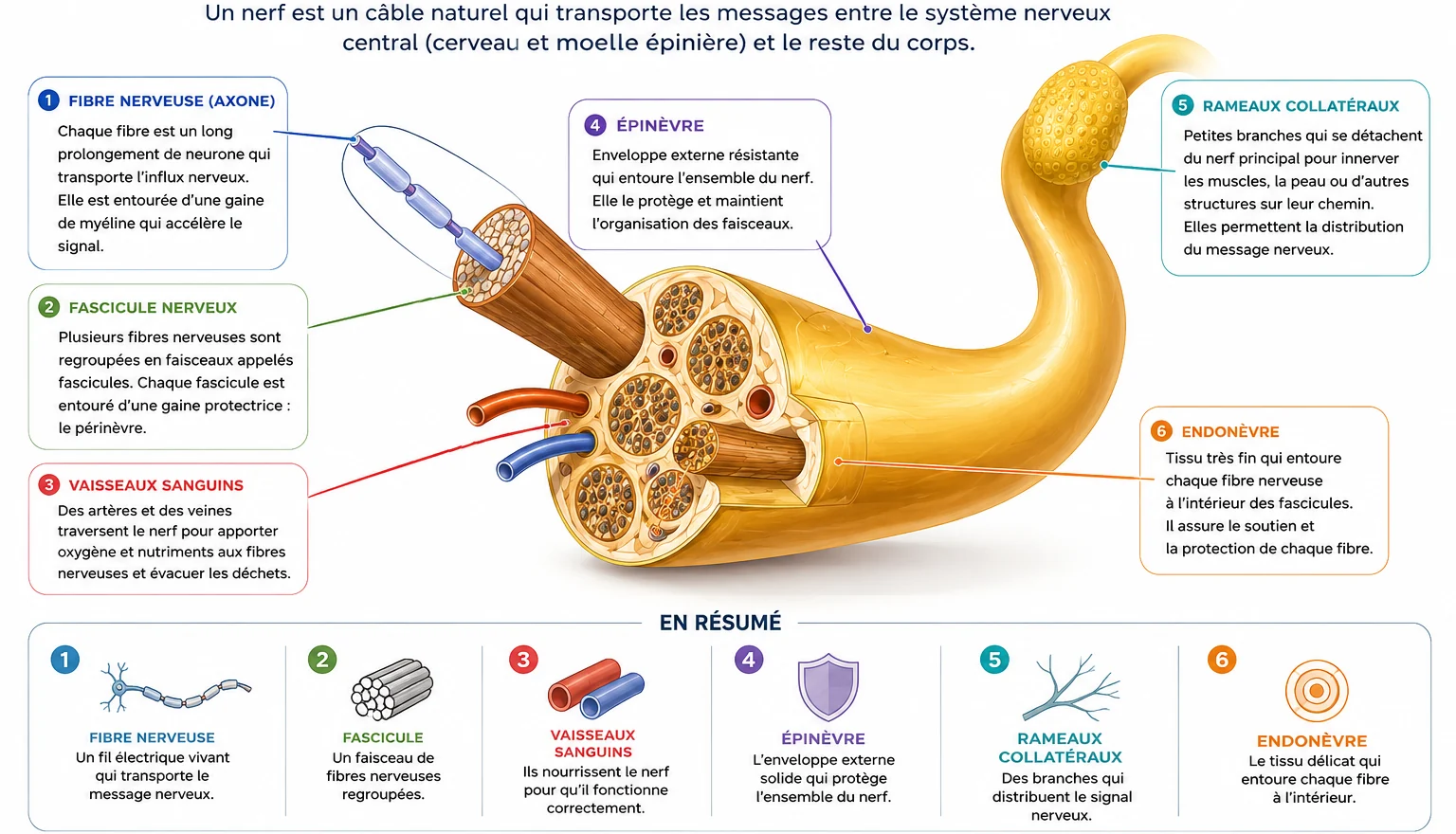
Details of the structure and functioning of a neuron
Psycho-emotional / psychosomatic interpretation
Introduction
As Plato said, body and soul are inseparable; one must not seek to heal one without the other. In other words, there is a predominant link between the psycho-emotional side and the physical body. Other expressions are just as revealing, such as: whatever is not expressed is impressed. Or again: what you reject never disappears. The body is thus a projection on which our pains manifest and express themselves. When we do not listen to ourselves, this is how the body comes to speak to us, in its own way.
The disease can be either the consequence of an accumulation of traumas, repressions, resentments and other experiences from childhood to adulthood, or it can be due to a strong emotional shock that occurred 6 to 12 months before the appearance of the first symptoms.
Here I invite you to probe your mind to find part of the answers through your past, your childhood, (painful) memories, traumas, undigested events or emotions, frustrations, grudges, bitterness, etc. The idea is to start putting this puzzle together, step by step, in order to bring to light the parts of you that are still unacknowledged or unconscious, such as fears, frustrations, desires, psychological wounds, etc.
Before talking about somatization, one thing must first be understood: everything that makes up this world, this universe, is energy. At the infinitely small scale, everything is particle and wave (wave-particle duality), so energy forms matter just as matter forms and constitutes energy. As Lavoisier said, or even Anaxagoras before him: “nothing is lost, nothing is created, everything is transformed”, but above all, everything influences everything! Thus, whether it be thoughts (positive or negative), words or actions, everything has an influence, effects, real and concrete impacts! On you, as on others.
Some events during our life are difficult or even very difficult to live through and overcome, so sometimes we experience emotions, memories, traumas, desires that hurt us or make us ashamed. It then becomes hard and complicated to own them, to face them. From then on, an easier solution to manage is to redirect them and translate them into our body, completely unconsciously. It is a physical transposition of what we live and feel. Don't we sometimes say: “I have a knot in my stomach”, “I feel oppressed”, “my stomach is in knots”, “it took my breath away”, “I have a heavy heart”, “I have a lump in my throat”, “I'm fed up to the back teeth”, “my head is going to explode”, etc. These few examples are of course simple and arbitrary, but through them we begin to glimpse quite easily this link that is taking shape between the emotional and the physical body.
This phenomenon is called somatization. It can be felt in different respects: when we are ashamed of ourselves, when we have been humiliated, when we do not own our actions, when the image we have of ourselves is affected or hindered, when someone undermines our dignity, when we restrain and lock away our desires or wishes, when we are filled with anger, resentment, judgments, or grudges, etc. Generally speaking, our mind protects itself from what hurts us morally, and moves this pain into our body. Once again, it somatizes it. Another concrete example is self-mutilation, a transposition of mental pain into physical pain.
However, not all emotions, memories, wounds, desires can continually be transposed and somatized in the body without, on the other hand, a way to release them, accept them, and work on them. Illness is sometimes a metaphor. The body is the prerogative of the soul, which frequently tries to send us messages, in order to help us question ourselves, to dig up what we refuse to see, to shed light on sensitive points, with the sole aim of leading us toward more serenity, inner joy, liberation, and awareness.
Proposed interpretation of MS
This proposal is a compilation of several works such as “Your Body's Telling You: Love Yourself!” by Lise Bourbeau, Le grand dictionnaire des malaises et des maladies (The Great Dictionary of Ailments and Diseases) by Jacques Martel and Lucie Bernier, Dis-moi où tu as mal, je te dirai pourquoi (Tell Me Where It Hurts, I'll Tell You Why) by Michel Odoul, Décodage biologique des maladies (Biological Decoding of Diseases) by Christian Flèche, and other authors of emotional decoding.
The idea of the account that follows is not to constitute an exact truth but avenues for reflection and introspection for each and every one. It is very unlikely that you will recognize yourself in the entire description; however, if one or more points resonate with you, and bring up memories or even emotions, I invite you to reread them slowly and to note what comes to you.
A life lived under constraint
The idea that comes up most often is that of not living one's own life.
The person would have gradually given up their true desires in order to meet:
- the expectations of their family;
- the values imposed by those around them;
- the need to please;
- duty or sacrifice;
- the responsibilities they impose on themselves.
They then move forward on a path that no longer really belongs to them.
They may have the feeling:
- of living for others;
- of having abandoned their dreams;
- of having lost their inner freedom;
- of being locked into a role they did not choose.
The authors often speak of a life built more out of obligation than out of free will.
Conflict around movement and action
“I want to move forward, but I'm being prevented from doing so”, “I'm being forced”, “I have to do something I don't want to do”. There is a tension between acting and not acting.
The feeling of being locked in
MS is often described as a disease in which the body gradually becomes a prison.
This image is associated with the psychological experience of:
- feeling stuck;
- no longer being able to move forward;
- being paralyzed in one's life;
- being trapped in a situation;
- no longer seeing a way out;
- having lost one's drive for life.
The slowing down of the body symbolically represents a slowing down of inner movement. The person may feel locked in their own existence, unable to take back the direction they would really like to follow.
Difficulty following one's own plans: feeling that the other person's plans or will are imposed, to the detriment of one's own choices: “I have no future”, “I don't have the right to have my own plans”, “I have to carry out other people's plans”, “I am in conflict about the future”.
The fear of "falling"
The word "fall" is presented as the main symbolic key.
This fear can take several forms:
- falling physically;
- falling ill;
- falling in love;
- falling pregnant;
- falling from a height;
- falling into failure;
- being let down;
- seeing one's plans collapse;
- losing one's social position;
- losing one's security.
The conflict would not only be linked to an actual fall but to everything that represents a loss of stability, control or protection. The authors also mention traumatic events linked to a fall, an accident or a sudden feeling of collapse that may have left a significant emotional imprint.
An excessive need for control
The personality traits that frequently stand out:
- perfectionist;
- demanding of oneself;
- very responsible;
- rigid;
- strong-willed;
- refusing to make mistakes.
This person seeks to control everything in order to avoid:
- failure;
- suffering;
- criticism;
- dependence;
- rejection.
But this constant control itself becomes a source of exhaustion. The authors also speak of a difficulty in accepting the unexpected, in trusting life and in recognizing that certain situations naturally escape our control.
Difficulty asking for help
Despite deep fatigue, the person would tend to want to do everything alone.
They may believe that they must:
- be strong;
- not bother anyone;
- depend on no one;
- take on everything;
- carry others.
Paradoxically, as the disease progresses, they are forced to accept the help they previously refused. This gradual loss of autonomy is interpreted as a lesson in humility, in accepting one's limits and in trusting others.
Conflict between dependence and independence
Duality between dependence and independence.
On the one hand:
- wanting to remain autonomous;
- showing one's strength;
- keeping control;
- never needing others.
On the other:
- wishing to be supported;
- wanting to be protected;
- regaining emotional security;
- feeling the need to be taken care of.
This dependence is often experienced with shame or guilt. The books suggest that there is sometimes an unconscious desire to finally be allowed to rest. This point here is very important because a psychosomatic disease often reveals an inner conflict, a duality between two contradictory desires that oppose each other.
Conflict between contradictory actions or orders
Same thing here, a double bind: receiving, internally or externally, two contradictory injunctions: “do it / don't do it”, “leave / stay”, “stand up / sit down”. Symbolically, the body would be caught between two incompatible orders, or two incompatible desires.
Internalized anger and revolt
A deep but rarely expressed anger.
This anger can be directed:
- against oneself;
- against a parent;
- against authority;
- against the constraints of life;
- against a feeling of injustice;
- against an old suffering.
Instead of being expressed, it is held in, sometimes for years.
The authors also associate this anger with a silent revolt that ends up turning against oneself.
Devaluation, guilt and self-rejection
Another major theme is that of a lack of self-worth.
The person may have the impression:
- of never being good enough;
- of always having to do more;
- of never deserving rest;
- of being responsible for everything;
- of not being worthy of love;
- of constantly having to prove their worth.
They then develop constant self-criticism. The real struggle would no longer be directed against the outside world but against oneself.
Emotional rigidity
The books also speak of a difficulty in:
- expressing one's emotions;
- crying;
- showing one's vulnerability;
- accepting one's sensitivity;
- welcoming one's fears.
To protect themselves, the person "hardens", while the disease precisely affects a structure whose name evokes hardening (sclerosis). This emotional rigidity is often accompanied by a difficulty in adapting to life's changes.
Halt in personal development
The disease is also interpreted as the sign of a life that has become frozen.
The notions frequently found are:
- immobility;
- stagnation;
- loss of momentum;
- abandonment of one's dreams;
- difficulty choosing one's own direction;
- gradual renunciation of one's deep identity.
The person may have the impression of having stopped evolving or of no longer moving toward what truly suits them.
Conflictual relationship with authority
Conflictual relationship with constraints and authority: refusal of or suffering in the face of rules, orders, obligations and limitations. “I want to destroy the orders that come to me from above”.
The need to love oneself and make peace with oneself
According to these authors, the fundamental need is no longer only to heal physically but to find a fairer relationship with oneself.
This involves in particular:
- learning to love oneself;
- recognizing one's own worth;
- welcoming one's fears;
- accepting one's limits;
- letting go of guilt;
- ceasing to judge oneself so harshly.
They also mention forgiveness:
- toward oneself;
- toward one's parents;
- toward certain past experiences.
The goal is no longer to fight against oneself, but to regain a form of inner peace and unity.
Symbolism linked to parts of the body
- Tremor: “I want to back out.” Hesitation about plans, the future.
- Right leg: “I have to go but I don't want to”, “I feel obliged”, “I want to welcome”. The feminine left brain controls the motor right side of the body.
- Left leg: “I want to go but someone is preventing me”, “I want to be in action”. The masculine right brain controls the left side of the body.
- Anterior sciatica: “I must, I want to grab something but I feel held back”.
Avenues for change
The various books converge on several axes of transformation:
- regaining one's inner freedom;
- taking back power over one's own life;
- daring to say no;
- moving beyond perfectionism;
- letting go of the need to control everything;
- accepting help;
- welcoming one's vulnerability;
- expressing one's emotions;
- acknowledging one's fears rather than fighting them;
- rediscovering one's deep desires;
- developing greater psychological flexibility;
- accepting one's limits;
- learning to love oneself;
- ceasing to be at war with oneself;
- forgiving oneself;
- forgiving others;
- choosing one's own path rather than the one imposed by others.
Summary
In short, the main psychosomatic dimensions described are:
- Constraint and confinement: living a life that no longer reflects who one is.
- Fear of falling: fear of being abandoned, of losing one's place or of seeing one's life collapse.
- Excessive control: perfectionism, rigidity and difficulty letting go.
- Self-sacrifice: putting the needs of others before one's own.
- Autonomy–dependence conflict: wanting to take on everything while longing to be supported.
- Devaluation: strong self-criticism, guilt and the feeling of never measuring up.
- Self-rejection: difficulty accepting, recognizing and loving oneself, particularly highlighted in autoimmune diseases.
- Emotional blockage: held-back emotions, internalized anger and difficulty expressing one's vulnerability.
- Symbolic immobility: the impression of no longer moving forward in one's life or of no longer following one's own path.
- Inner reconciliation: healing is presented as a path of self-acceptance, forgiveness and return to one's deep identity.
Symbolism of autoimmune diseases
As mentioned, autoimmune diseases are diseases in which your own immune system attacks and destroys your healthy cells. Several diseases are concerned by this dysfunction: multiple sclerosis but also Hashimoto's thyroiditis, type 1 diabetes, vitiligo, autoimmune hepatitis, etc.
Autoimmune diseases refer to no longer knowing how to distinguish “self” from “non-self”, “me” from “not me”. In other words, this can reflect an identity crisis: either no longer knowing exactly who we are, what drives us, our deep identity, our inner child. Or going against, or in a different direction from, what we deeply aspire to. There is something like an identity conflict, a loss of connection to oneself.
A few sentences that might speak to you:
- I allow my identity to be destroyed, I allow myself to be destroyed.
- I am not recognized for who I am.
- I don't know, or no longer know, where the boundaries are between me and the other.
- I don't know who I am, because I don't know what people want me to be.
- A part of me must be destroyed or repressed (personality, character…).
- I am angry with myself.
- I want to be recognized by a family that I do not recognize.
The conflict against oneself
The immune system attacks its own cells; this dynamic becomes a psychological metaphor for self-rejection.
The person may then develop:
- a difficulty recognizing themselves;
- a lack of self-acceptance;
- a constant inner war;
- a conflict between different parts of their personality;
- a difficulty loving certain facets of themselves.
The person may believe that the problem comes mainly from outside, whereas a significant part of the conflict lies in the relationship they have with themselves.
Recommended nutritional support & co
EO (Essential Oil) & VO (Vegetable Oil)
As a reminder, any EO must first be diluted in a VO; also, as its active ingredients are very concentrated, 1 to 2 drops are generally sufficient, whether by diffusion, orally or on the skin.
Lemon eucalyptus EO and black spruce EO mixed together, diluted with hazelnut vegetable oil. To be used on painful areas. 2 drops maximum of each EO, after first applying the VO to the area.
True lavender, also called officinal lavender, can be useful in diffusion or applied in diluted form. It is an oil that promotes relaxation and soothing, and therefore calms anxiety and stress, and makes sleep easier. It is also a mild analgesic (painkiller); it helps relax muscles. It helps fight migraines. It can be seen as a natural sedative that regulates the nervous system, soothes the nerves, calms excitability. Hypotensive properties, reduces heart rate as well as blood pressure.
In the same context, we could also mention ylang-ylang EO, which has fairly similar properties, while also being a general anti-fatigue.
What should be avoided here are EOs that contain molecules from the ketone or camphor family, which can be neurotoxic at higher doses.
Supplements
- Coenzyme Q10
- Fat-soluble molecule, antioxidant and cornerstone of mitochondrial / cellular energy production (ATP). This energy production reduces fatigue and inflammatory markers.
- If there is one to remember, it is this one, because its antioxidant action will also make it possible to eliminate the free radicals (unstable molecules) produced by the disease.
- To be taken during a meal (with fats if possible).
- Magnesium bisglycinate
- This combination of this mineral salt and this amino acid improves its absorption in the body.
- It helps reduce fatigue, combat stress, promote muscle relaxation as well as good sleep, maintain athletic performance, and support the nervous system.
- Essential to the body.
- Preferably to be taken with the evening meal.
- Taurine
- It is a neuroprotective (neuro-soothing) and antioxidant amino acid; it contributes to energy metabolism, as well as to muscle function. It helps performance and recovery, makes sleep easier, and also improves cardiovascular health.
- Preferably to be taken in the morning on an empty stomach.
- Vitamin D3
- A cofactor of bone health, it improves the absorption and fixation of calcium and phosphorus to remineralize bones.
- It is involved in the synthesis of neurotransmitters.
- It is also a recognized immunomodulator; it inhibits excessive immune reactions, which is why this supplement is of interest here.
- To be taken during a meal (with fats if possible).
- Creatine
- These are 3 amino acids that promote and support muscle and cellular energy production. This can therefore be of benefit for fatigue, strength and possibly cognition.
- It is widely used by athletes, because it allows better muscle development and improves recovery.
- Preferably to be taken with breakfast.
It is advisable to discuss taking these supplements with your doctor or the healthcare professional who follows you, in order to get their opinion in relation to your conditions.
Foods & spices
Fatty acids - omega-3
Generally speaking, adopting Mediterranean cuisine, containing in particular fatty acids and, underlying them, omega-3s, can help cardiovascular and brain functions.
This concerns oily fish: sardine, mackerel, trout, herring, anchovy, salmon, etc.
- Be careful not to overdo large predatory fish, which, through bioaccumulation, contain more heavy metals.
We can also mention eggs, but also oils: olive, walnut, flaxseed oils, etc.
As well as oilseeds and nuts: avocados, almonds, walnuts, hazelnuts, etc.
These foods have several virtues:
- They are anti-inflammatory, relieve the joints and promote recovery.
- Beneficial for the cardiovascular system: lowering of triglycerides, hypotensive, support of heart rhythm.
- Major constituent of neuronal and retinal membranes, supporting memory and protecting against cognitive degeneration
Turmeric - black pepper
Combining the two allows better absorption of curcumin (curcumin - piperine), the active ingredient we are interested in within turmeric. Curcumin is a powerful natural anti-inflammatory and antioxidant.
Ginger
Also anti-inflammatory and antioxidant, effective anti-nausea effects, improves digestion (stimulates enzymes and reduces bloating). Helps fight fatigue.
Saffron
Saffron is of interest on the mood and neurological axis; it has an antidepressant effect and supports emotional balance. It calms nervous tension and anxiety, and makes sleep easier.
The value of an energetic approach
An energetic approach gives a more holistic and unified vision of body and mind, where, thanks to a complete reading grid, we seek to diagnose and observe all the energetic imbalances located on and in the body. The type, extent and location of an imbalance give us information about its possible causes and origins, and give us interesting avenues of interpretation. This therefore includes not only the physical / physiological side, but also the psycho-emotional and psychic part. The treatment aims to discharge the various harmful, worn-out or negative energies, before recharging, locally or globally, the parts that need it, and finally harmonizing the whole. It also aims to remove all negative charges. The treatment also makes it possible to release blockages, which may subsequently give rise to realizations or improvements on the patient's part. During the treatment, emotional releases (tears, spasms, shivers…) may also occur, which we welcome without judgment and with kindness. Before and after the treatment, there is a whole space for exchange with the patient, to interpret and explore further what the therapist may have felt and observed. This part is essential, because we must not forget that this treatment is a collective work between the therapist and the patient, in which the therapist merely accompanies them. Each person has self-healing abilities that the therapist will seek to stimulate, whether physical, mental, moral or spiritual. This can lead the patient to revisit events that occurred during their childhood, to step back from their daily life, to digest traumatic periods, or to perceive the meaning and interpretation that can be drawn from their illness.
Additional advice
Generally speaking, I recommend two habits to integrate into your daily life, which are beneficial for body and mind. The first is to stimulate your parasympathetic system through mindfulness and relaxation activities; the second is to maintain creative activities.
Relaxation
The parasympathetic system works hand in hand with the sympathetic (or orthosympathetic) system. The sympathetic system is activated when you are stressed, in danger, anxious, and secretes hormones such as cortisol, aldosterone, adrenaline and others, which has the effect of putting the body in a kind of state of alert (accelerated heart rate, tension, etc.). This system was originally designed to escape our predators, as mammals. The problem is that in our modern societies, stress, anxiety, fears and anguish are the ills and the scourge of our daily lives. The body is not made to remain in this permanent state of alert, which is why it is important to also call upon the parasympathetic system, in order to rebalance ourselves. Here we will seek relaxation and rest, to bring your body back to a state of well-being, calm and inner security. This can be by doing sports, meditation, yoga, walks in the forest, contact with nature being highly recommended. A somewhat unusual relaxation activity could be to try a flotation spa in salt water. It is important to cultivate moments of calm and recovery in your daily life, and to take this time for yourself, even if it is only a few minutes of walking or reading.
Mindfulness
By mindfulness we mean being fully in the present moment; there is, by the way, an interesting book on this: “The Power of Now” by Eckhart Tolle. So, when you eat, be 100% in your meal, become aware of every flavor and every sensation you perceive; it can also be when you take your shower, or during a walk in the forest: take the time to observe what you see there, what you smell and feel. Why is this subject mentioned here? Well, because, without you realizing it, your mind very often takes you either into the past or into the future. Into the past, because you will go over, ruminate, replay a remark that displeased you, something you said that you regret, a person who was rude to you and cut you off in traffic, something you would have liked to say and did not say, and so you replay the movie of the story. The same goes for the future: we regularly make anticipations and projections, the fear of a partner leaving, the fear of not breaking even financially in 2 months, I'm going on vacation in 2 weeks, have I finished this or that task, have I booked this activity, when I get back I'll have renovation work in my house, how will I look after the children, etc. We then continue to perpetuate an emotion of pain experienced in the past, or else out of fear that something will happen. So we are either in the past or in the future, but not in the present moment. We then mentally relive the conflict or the fear, reactivating the associated emotional charge. It should be noted that the brain does not distinguish between a real fear and a fear you imagine, past or future. And so, the level of stress linked to this charge will be very real and present in your body, with the secretion of cortisol as mentioned earlier. It is therefore essential to know how to clear your mind, because a pleasant activity combined with intellectual rumination will of course not have the desired effect!
So that is what mindfulness is: knowing how to quiet your mind in order to be totally present to what you are doing, in other words, knowing how to let go!
And so, what do I mean by creative activity?
By this I mean anything that, directly or indirectly, stimulates your imagination, your creative mind; it can be: music, singing, drawing, painting, gardening, DIY, photography, cooking, dancing, etc. Why?
Because it is precisely these activities that make letting go easier, naturally quiet our mind, and immerse us in a bubble outside of time, yet fully within our inner being. These activities, while relaxing, allow us to escape, to reconnect, with ourselves and with what surrounds us, and to release the pressure.
Sport!
Finally, whatever your abilities and condition, sport will always have a greatly beneficial effect; it is your best ally! Even if it is only a few minutes of walking, it is always better than our common enemy, a sedentary lifestyle!
Many studies show better longevity and better living conditions for those who have managed to maintain and preserve their muscular system. Fewer cardiovascular problems, less diabetes, better brain activity, healthier organs, better mobility, etc.
Testimony
I offer you this testimony from a 22-year-old young woman who tells of her journey facing the disease. She chose to go on a trip around the world following this diagnosis… I'll let you discover it!
Multiple sclerosis: her trip around the world to tame the disease | Mille et Une Vies