
Diet
Monthly calendar of seasonal foods
Fruits, vegetables, grains & legumes
Translated by AI from FrenchRead the French original
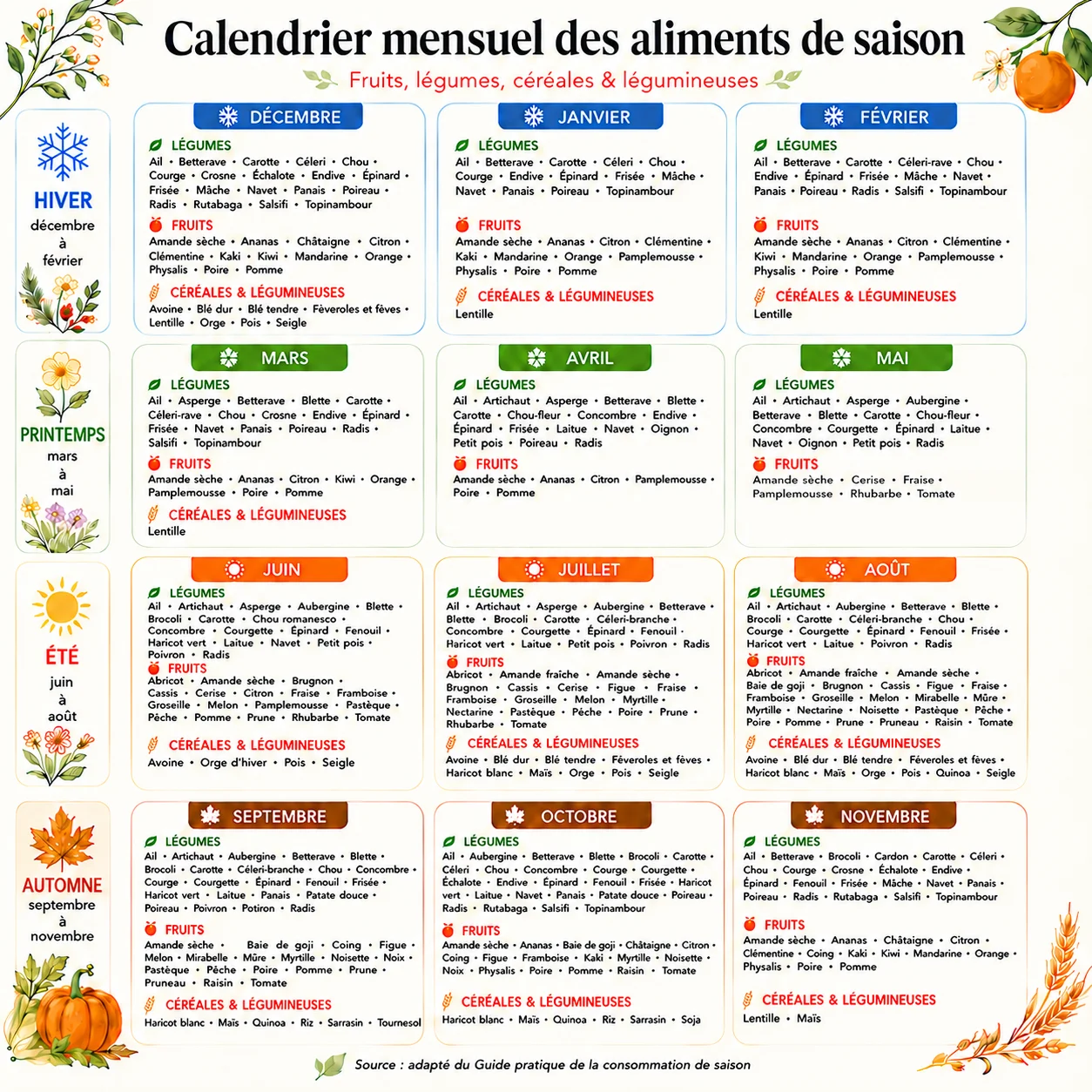
Eating in step with the seasons
Winter
December to February
In winter, food is more nourishing and comforting. Citrus fruits, kiwis and cabbages notably provide vitamin C and antioxidants needed to support immunity, while starchy foods, whole grains and legumes supply the energy needed during the cold period.
Spring
March to May
In spring, we favor green vegetables, asparagus, radishes, spinach, artichokes and young shoots. It is an ideal time to gradually lighten your diet and increase your intake of fiber, vitamins and minerals. It is a spring detox, which naturally accompanies and supports the work of the liver and kidneys.
Summer
June to August
In summer, the main goal is to promote hydration. Fruits and vegetables rich in water, such as watermelon, melon, cucumber, tomato or zucchini, provide water, minerals and antioxidants all at once, which are particularly useful when temperatures rise.
Fall
September to November
In fall, food gradually becomes denser and more nourishing. Squashes, carrots, sweet potatoes, mushrooms, apples, pears and nuts provide fiber, beta-carotene / vitamin A, minerals and good fats. They help with the transition to winter while supporting the body’s energy needs.
This calendar follows the recommendations of Greenpeace.
Source: greenpeace.fr/guetteur/calendrier