
Diet
Fats and fatty acids
Understanding, choosing and balancing for health
Translated by AI from FrenchRead the French original
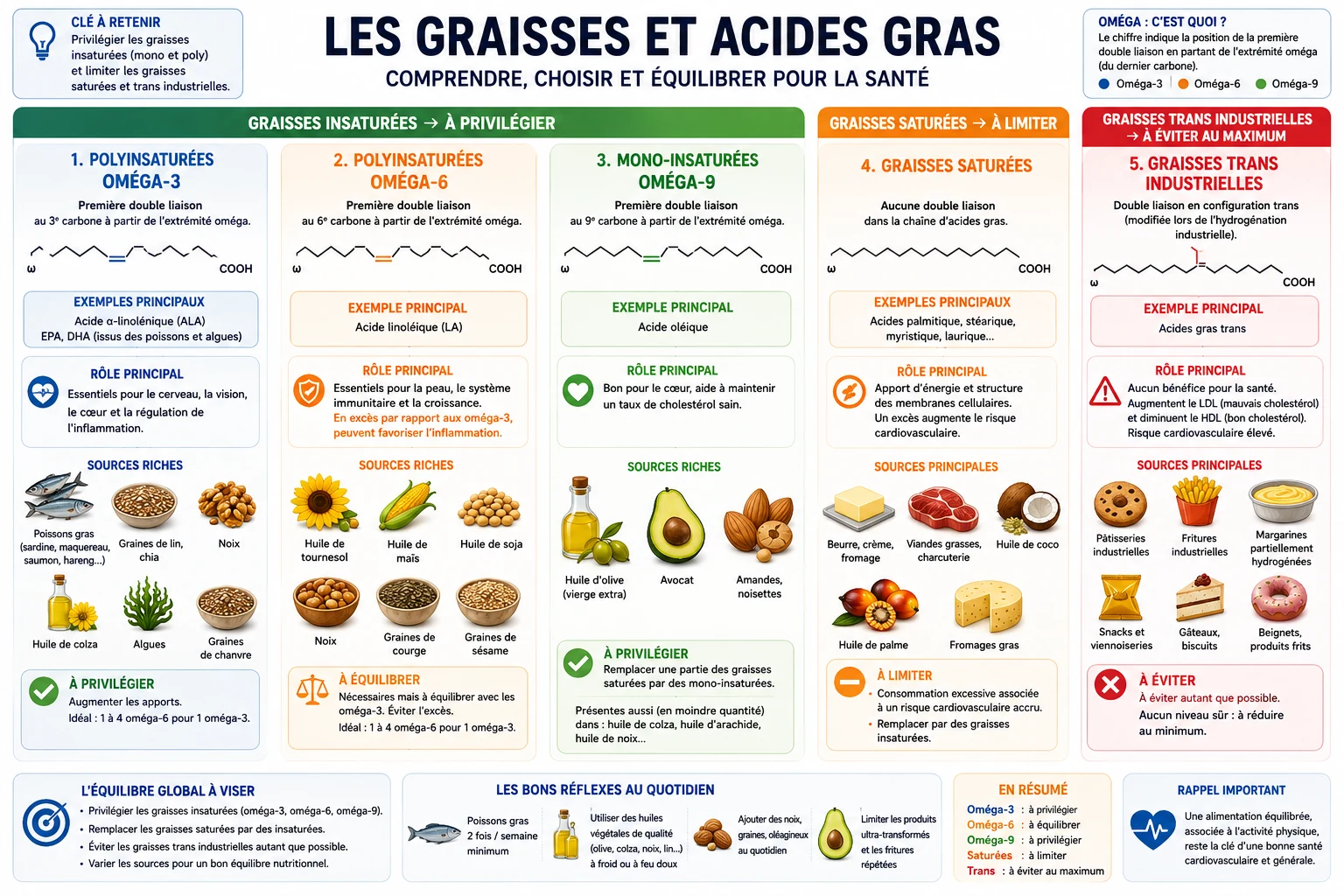
This chart presents the different fats and fatty acids found in the various foods we eat every day. This classification makes it easier to identify and distinguish what to favor and what to limit.
Omegas: unsaturated fats
Among omega fatty acids, there are omega 3s, omega 6s and omega 9s. The first thing to note is that it is better to favor omega 3s and omega 9s. You can of course eat omega 6s, but always in balance with omega 3s, with a ratio of 1 omega-3 to 4/5 omega-6.
Omegas represent unsaturated fats, with omega 3s and omega 6s as polyunsaturated fats, and omega 9s as monounsaturated fats. We aim to maintain a balance between omega 3s and omega 6s because some omega 6s are a bit more inflammatory.
Saturated fats and industrial fats
The last categories are saturated fats and industrial fats, and this is where you need to be a little more careful. Saturated fats include cheese, red meat, butter, etc. So you can eat them, but in reasonable quantities. Typically for red meat, two servings per week is a good amount.
As for industrial fats, you can of course eat them from time to time and treat yourself, but not every week. It is these saturated and industrial fats that will promote a rise in cholesterol (LDL) or triglycerides and affect your blood test results.
Good fats, necessary for health
On the other hand, good fats are necessary for health, just like cholesterol, for that matter: you need a minimum of it, since these nutrients are used to build the structure of our cell membranes, support brain health, protect the heart, etc.
Adopting Mediterranean cuisine
Generally speaking, adopting Mediterranean cuisine, which notably contains fatty acids and, underlying them, omega 3s, can help cardiovascular and brain functions.
This concerns oily fish: sardines, mackerel, trout, herring, anchovies, salmon, etc.
We can also mention eggs, but also oils: olive oil, walnut oil, flaxseed oil, etc. As well as avocados, and nuts and seeds: almonds, walnuts, hazelnuts, etc.
The benefits
- They are anti-inflammatory, relieve the joints and promote recovery.
- Beneficial for the cardiovascular system: lower triglycerides, lower blood pressure, support heart rhythm, regulate cholesterol (maintaining good HDL cholesterol).
- Protection of the skin barrier (skin elasticity and hydration), cell renewal, support for the immune system.
- A major component of neuronal and retinal membranes, supporting memory and protecting against cognitive degeneration.