
Aromatherapy
Essential oils: benefits and precautions for use
The main families of molecules, their strengths and their risks
Translated by AI from FrenchRead the French original
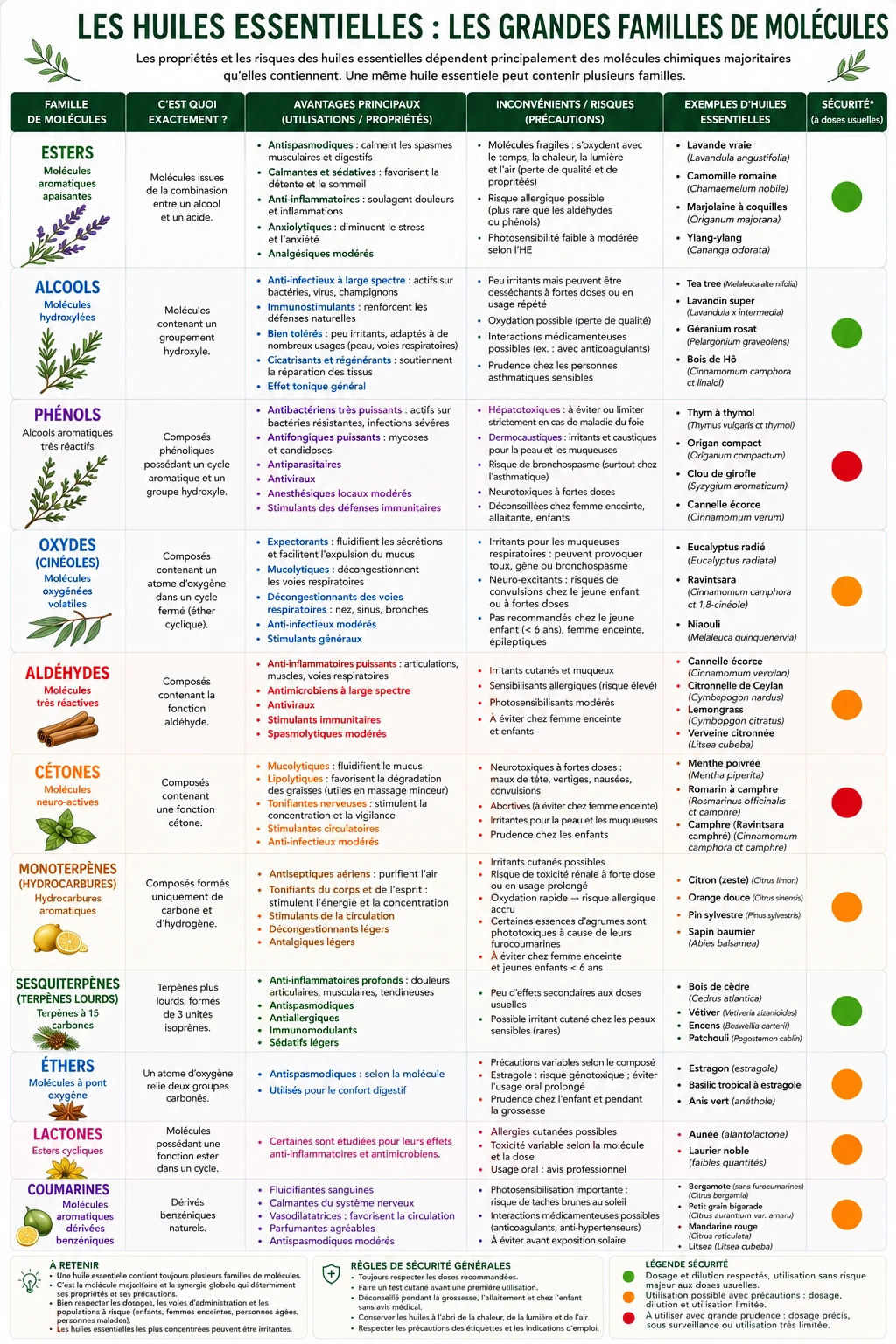
This article, together with its chart, presents the benefits of essential oils (EO) as well as the points of caution you should know about. The chart describes the different main molecules an EO can contain. An essential oil generally contains several types, including one main type, which it is important to know.
Natural does not mean safe
A natural origin does not guarantee harmlessness. Mushrooms, for example, grow freely in nature, and yet some of them are highly toxic, even hepatotoxic: they can damage the liver, to the point of destroying it.
Depending on the molecules they contain, EOs have antiviral, antibacterial, analgesic, circulatory, wound-healing and other properties, but some of them require precautions.
The molecules to know
Phenols: powerful anti-infectives
Some essential oils, such as winter savory or compact oregano, have very effective antiviral, antibacterial and even antifungal properties. In vitro, they have shown excellent results against urinary tract infections (cystitis, urethritis), boils and pharyngitis, as well as against various fungi such as Candida albicans, or bacteria such as Escherichia coli, Staphylococcus aureus, Streptococcus pyogenes, etc. These oils are therefore very valuable for fighting infections.
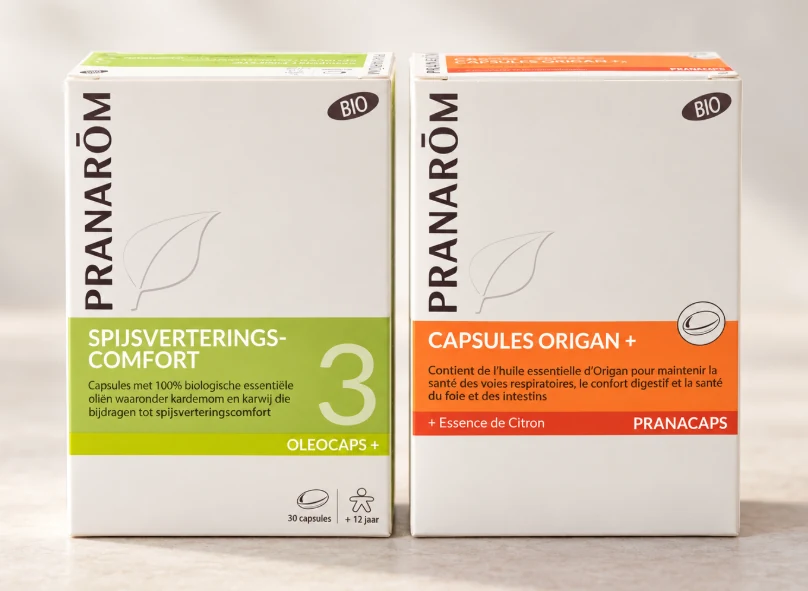
Oleocapsules: a safer form
Laboratories such as Pranarom, among others, offer oleocapsules containing these essential oils in the right proportion, mixed with other oils:
Liver protection: the oregano capsules are combined with lemon, which increases bile flow and is antioxidant and alkaline, thus protecting the liver.
Better absorption: rapeseed oil forms a lipid bubble that promotes absorption and diffusion in the digestive tract.
Combining these capsules with true lavender creates a real synergy.
Ketones: effective, but to be dosed with care
Ketones are mucolytic: they thin mucus. They are used, for example, for colds and ear, nose and throat infections, often alongside expectorant essential oils, which help expel excess mucus.
The chemotype: an essential criterion
The chemotype corresponds to the main molecule and the variety of the plant. True lavender and spike lavender, for example, are both lavenders, but their properties and precautions for use are completely different. You therefore need to pay attention to the exact variety of the plant.
At-risk groups
Three categories of people are subject to restrictions:
- Children, especially those under 12.
- Pregnant women.
- Elderly people.
My essential oil travel kit
Here is what I favor when I’m on the move, or traveling!
Oleocapsules
- Digestive comfort (non-infectious): made of ginger, peppermint, Chinese cinnamon and lemon. This blend is antispasmodic, anti-inflammatory and alkaline.
- Oregano: for an anti-infective action.
These are effective for diarrhea, traveler’s diarrhea, or other types of digestive discomfort.
Essential oils
- Tea tree: one of the most versatile oils. Antiseptic and anti-inflammatory, it treats skin problems. A very good antifungal against fungi and fungal infections, it also strengthens the immune defenses, fights fatigue and soothes insect bites.
- Java citronella: an effective mosquito repellent.
- Clove (optional): a very good painkiller for toothaches.
- Italian helichrysum: the queen of wound healing.
- Wintergreen and/or katafray: for rheumatism, osteoarthritis and joint pain.
- Ravintsara: the must-have oil for the respiratory system and infectious conditions, especially viral ones (flu, colds, etc.), immune support.
- Spike lavender: to soothe insect stings, bites and burns, effective for all dermatological problems (herpes, bedsores, wounds…).
- Ginger: antiemetic, against nausea and motion sickness. It also fights constipation.
- True lavender: another very versatile EO. It is anti-inflammatory, analgesic and muscle-relaxing. It regenerates the skin, is wound-healing, antiseptic and antibacterial, fights migraines and aids digestion.
- Peppermint: drains the elimination organs to detoxify the body (kidneys, liver, intestines), aids digestion, relieves stomachaches, reduces vomiting, antiviral, analgesic (headaches, periods, migraines).