
Nervous system
Managing emotions / limbic system
The path of an emotion through the brain and the body
Translated by AI from FrenchRead the French original
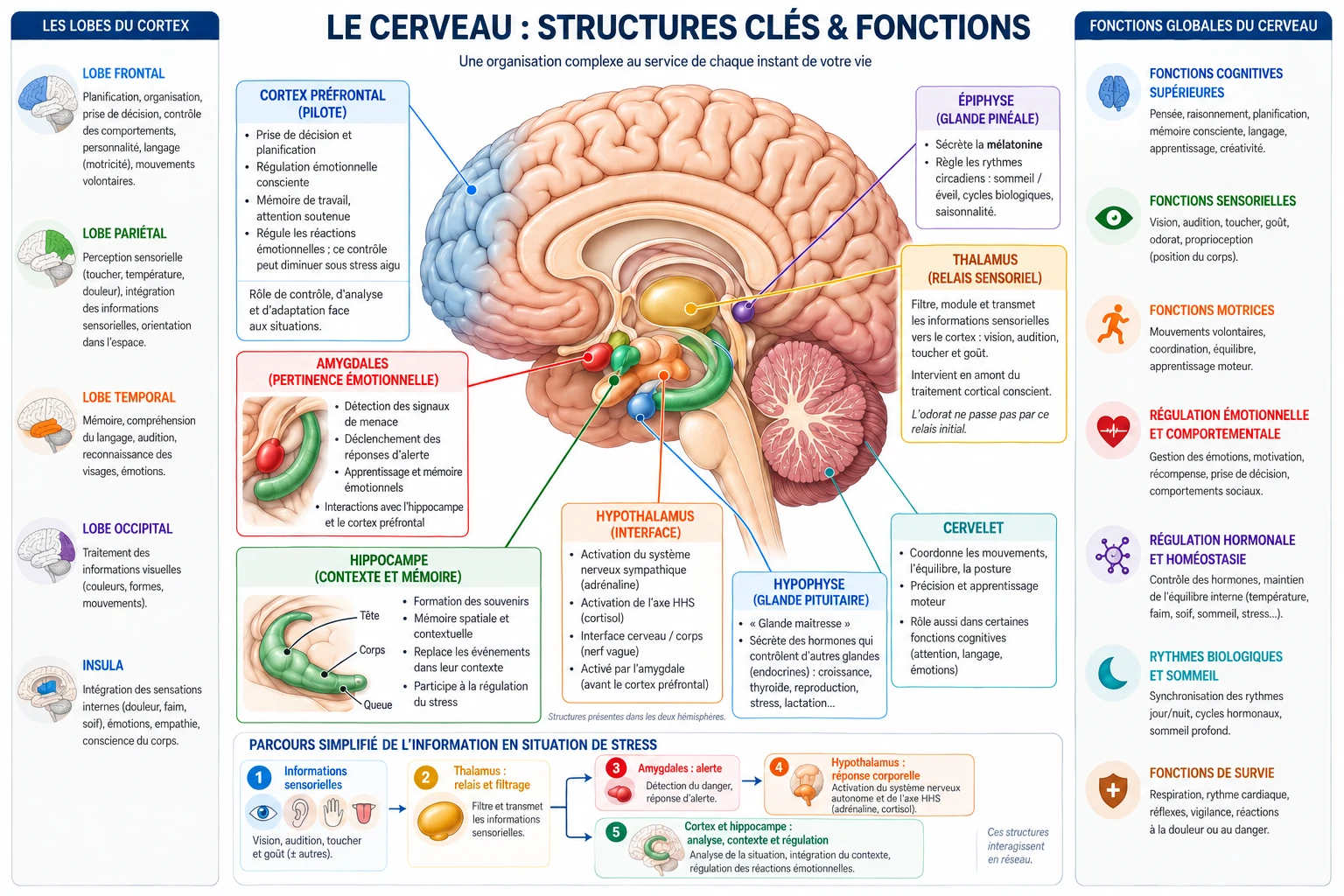
Here I invite you to discover the path followed by an emotion, an experienced event, and the reactions it triggers in your body. So we are going to talk about the nervous system and, underlying it, the limbic system, which manages emotions, memory, etc.
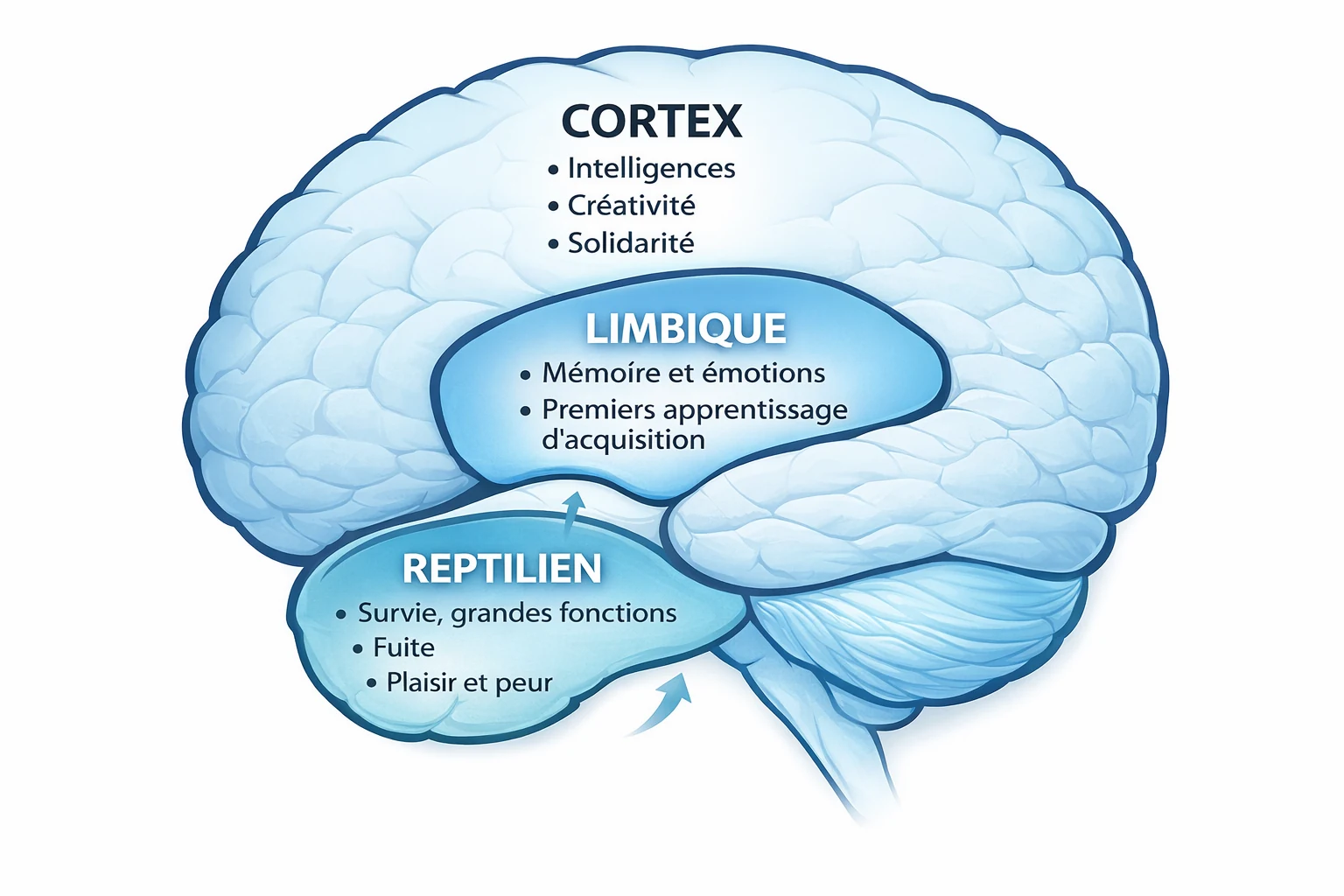
The path of an emotion
Here are the chain reactions that occur after experiencing a stimulus that produces an emotion:
- Stimulus: something is perceived through our senses (image, sound, sensation, smell…).
- Thalamus: receives, filters and relays a large part of the sensory information.
- Amygdala: quickly assesses the emotional significance of the stimulus, in particular its relevance or a possible threat, in order to act very quickly if there is danger.
- Hippocampus: provides the context and associated memories (“have I experienced this before?”). What was seen, heard, etc. It is a temporary transit area.
- Prefrontal cortex: analyzes and interprets the situation more finely and takes part in regulating the emotion. The memory is transferred and consolidated at this level and in other areas of the neocortex for long-term storage.
- Hypothalamus: turns this assessment into a bodily response, notably via the autonomic nervous system and hormonal pathways.
- Body: changes in heart rate, breathing, muscle tension, sweating, hormonal secretions, etc.
The hormonal response
So the hypothalamus and then the pituitary gland will release several hormones to activate the body according to the emotion:
- Adrenaline (increased heart rate, breathing rate…)
- Cortisol (stress hormone)
- Aldosterone (constriction of the vessels, increased blood pressure…)
Then the liver will release sugar to give energy to the cells, so the pancreas will release insulin so that these same cells absorb it, etc.
The autonomic nervous system
This system is what is called the sympathetic / orthosympathetic system, responsible for preparing you to flee or defend yourself in case of danger. It lives in balance with the parasympathetic system / vagal system, responsible for promoting relaxation, rest and unwinding. They are part of the autonomic nervous system (ANS).
An example: the shadow of the snake
Let’s take an example: you are in your garden and you see a snake-shaped shadow:
- The thalamus receives the information through your senses, filters it and passes it on.
- At the same time, the amygdala and the hippocampus receive the information:
- The amygdala activates the sympathetic system (alert) via the hypothalamus and the pituitary gland, through adrenaline, cortisol, etc.
- The hippocampus, for its part, analyzes and processes all the contextual information (sight, hearing, smell…).
- Once the information has been analyzed by the hippocampus, the brain realizes that it is only the shadow of the garden hose.
- The information is then passed on to the frontal lobe and the emotional reaction is regulated.
- The information is then stored in the neocortex along with the whole context.
Post-traumatic stress and EMDR
When we talk about post-traumatic stress, hard events, painful memories, the information can remain stuck in the amygdala area and not have been processed via the hippocampus with the sensory information (sight, hearing, touch…), because the information was short-circuited (very high cortisol and adrenaline levels…).
From then on, flashbacks can occur, as well as nightmares and emotional reactions at any time, and the system can go back into a state of alert for no apparent reason. This can happen in cases of assault, robbery, accidents, etc.